Posted by opspl-online Jan - 1 - 2013 0 Comment

In this volume of poetry, Dr. Antonio Gomes invites the reader to an imaginative journey in finely crafted verse that traverses numerous stages of life, contrasting moods, diverse continents, the compelling faces of love, singular moments in personal history and that of his patients, and the many-splendored dances of life and death. The distinctive art of Vamona Navelcar (Ganesh), adds a unique touch of magic to the evocative words of the medicine man
Categories:
Posted by opspl-online Jan - 1 - 2013 0 Comment
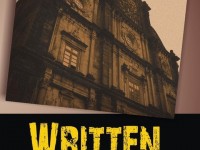
A very detailed look at the art and architecture of the Jesuit buildings in Goa, once the headquarters of the Portuguese empire in the East. Among the buildings studied are the Colegio de S. Paulo Velho (1541-1578), the male and female catechumenates (1550s), the hospital for indigenous people (1551), the noviciate (1556 1664), the orphanage (1558), the first church of S. Paulo Velho (1541-1560), the second church of S. Paulo Velho (1560 1579), the Bom Jesus (1594-1605), the Colegio de S Paulo Novo (1610-1620), the colegio do Espirito Santo in Salcete, the Colegio de Santo Inacio, Rachol (1606-09), and the recreation site at Santana.
Categories:
Posted by opspl-online Dec - 1 - 2012 0 Comment

'It was a bright and sunny morning. Moustafa announced that his small family had to move to another oasis....' A charming story set in the Arabian desert, amidst a camel family. The star of the story is the baby camel.
Categories:
Posted by opspl-online Dec - 1 - 2012 0 Comment
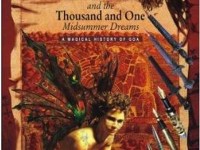
IN ENGLISH: When the Great Mother Earth suddenly decides that She's had enough of the human being, it is Puck, the pixie, who takes up the role of convincing Her of the value of man. Man is valuable because the history of the Earth is written in our stories.
Puck sets out to prove this with the help of 13 magical pens, travelling through Goa collecting stories during three nights. That's how long Mother Earth gives him before she destroys man forever. Will Puck achieve his task?
Discover the roots of ancient civilizations, the foot marks of contemporary cultures and the pockets of time present in one of the most fascinating regions of India.
Categories:
Posted by opspl-online Dec - 1 - 2012 0 Comment
When the Great Mother Earth suddenly decides that She's had enough of the human being, it is Puck,the pixie, who takes up the role of convincing Her of the value of man. Man is valuable because the history of the Earth is written in our stories.
Puck sets out to prove this with the help of 13 magical pens, travelling through Goa collecting stories during three nights. That's how long Mother Earth gives him before she destroys man forever. Will Puck achieve his task?
Discover the roots of ancient civilizations, the footmarks of contemporary cultures and the pockets of time present in one of the most fascinating regions of India.
Categories:
Posted by opspl-online Dec - 1 - 2012 0 Comment
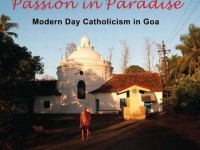
A German photo-journalist offers an interesting insight into contemporary religion in Goa. Rich in photographs. Interesting insight into contemporary religion in Goa Rich in photographs.
Categories:
Posted by opspl-online Nov - 1 - 2012 0 Comment

Capt. Rebello has been writing since his school-days, and happens to be the nephew of the pioneers who ran the Konkani weekly 'Cine Times' in Bombay. His earlier novel Memories of Another Day, published in 2008, is set in Eastern Europe, after the 1999 sinking of an oil tanker off the Atlantic coast and the Bay of Biscay in France, causing an economic loss of $500 million. The fleet owner abandoned three other vessels with hundreds of seafarers on board in Montenegro. His next book, now being worked on, is set amidst seamen, and is to be called 'Cruise the Horizon' about the hardships faced in a supposedly cheerful cruise line industry.
Categories:
Posted by opspl-online Nov - 1 - 2012 0 Comment

Men at sea face a new danger off the coasts of Africa and in the Indian Ocean, in the form of piracy. This is the theme of Captain Norbert Rebello's second novel set at sea.
Cloaking this serious issue in the garb of fiction, Capt. Norbert takes the reader from the south-eastern Bangladesh and its Karnaphuli river, to the Ivory Coast, and off the coast of Indonesia. But the main action is set off the Somalia coast, where the partly-Indian crew -- a growing reality in the merchant navy these days -- gets caught up with a racy story of desperation, violence, mid-sea piracy and love.
Capt. Rebello has been writing since his school-days, and happens to be the nephew of the pioneers who ran the Konkani weekly 'Cine Times' in Bombay. His earlier novel Memories of Another Day, published in 2008, is set in Eastern Europe, after the 1999 sinking of an oil tanker off the Atlantic coast and the Bay of Biscay in France, causing an economic loss of $500 million. The fleet owner abandoned three other vessels with hundreds of seafarers on board in Montenegro. His next book, now being worked on, is set amidst seamen, and is to be called 'Cruise the Horizon' about the hardships faced in a supposedly cheerful cruise line industry.
Categories:
Posted by opspl-online Nov - 1 - 2012 0 Comment

After winning hearts via her Konkani, Espi Mai is stuck again. Now, she's into speaking fluent Konkani, with her new book. It is written in a very engaging and inclusive style.
Categories:
Posted by opspl-online Oct - 1 - 2012 0 Comment

Mapusa was once a sleepy small town in Bardez and grew out of the settlement known as Gaunsavaddo that was by the river, and Angodd. Today, the bustling city is the commercial capital of North Goa, has a colourful market, and has produced a number of proud sons of Goa.
Former Saudi-based expat, a resident of Anjuna and a writer who honed his skills in cyberspace, Domnic PF Fernandes released his book in October 2012. Fernandes' book is more his own personal reminiscences rather than a formal history.
To contrast the change that has come about, he takes a walking tour through the urban area, describing what he knew of it in the late 1950s and what exists today. Many names, both prominent and humble, people its pages. Right from the Viscount of Bardez, to one of the most famous jewellery designers across the world Ambaji Shinde, the Mapusa-linked Aquino Braganca who was aide of former Mozambique President Samora Machel, bishops who trace their roots to Mapusa and the many merchants and businessmen who make Mapusa what it is.
Categories:
Posted by opspl-online Sep - 1 - 2012 0 Comment

Without doubt, Irene Heredia lived amidst priviledged times. A quick glance through the 28 pages of photographs would tell you that. She was a University of Bombay gold medalist at the B.A. in 1938, rare indeed for a woman student then. Her husband, the late Jimmy Heredia, was the sheriff of Bombay and honorary consul of Brazil. She rubbedshoulders with ambassadors, consuls, the Pope, Cardinal Gracias, President Radhakrishnan, the then Emperess of Iran, queens and Gandhians. Her relatives include missionaries to Malacca and Charles Correa.But she knew tough times too. Then there's early deaths in the family, migration, and the sudden fluctuations between doing well and instant poverty were the stories that many Goan families carry in their hearts. The author's mother was widowed in her 20s. Her father again died quite early too.
Categories:
Posted by opspl-online Jul - 1 - 2012 0 Comment

Brenda Rodrigues, once known as the 'Connie Frances of Bombay', is as adept in building word-pictures of places she visited. In this travelogue, she takes us across India and the rest of the globe, with her charming mosaic of episodes and sights that she encountered in four decades of being an avid globe trotter.
From her visit visit abroad, to London in 1970, we encounter fascinating stories of people and instances that keep the reader glued to her work. Stories come in from France, Goa, Nagaland (The Scotland of the East). To North America and London. We reach North East India again, and then Italy and the UAE. France, Scotland, the rest of the UK, Thailand, Egypt, Israel, Italy, Switzerland, even China, Gilbraltar, the Netherlands...
Categories:
Posted by opspl-online Jun - 1 - 2012 0 Comment

The definitive work on the history of Goan food. Understand why you eat what you eat. An impressive study, well appreciated already.
Goan cuisine contains alluring Christian, Hindu and Muslim strands. It is an interesting fusion from several cultures -- Arab, Portuguese, Brazilian, French, African, Chinese, Malaysian, British, Anglo-Indian and Konkani. In Goa, East did meet West... on the dining table.
This book offers an encyclopedic vision of a cuisine with a global touch -- how it was, how it is, and how it came to be. It is written by a veteran Goan historian who knows her food.
Cozinha de Goa is one of the outstanding books on the food of a particular Indian region, coming close to Banerji's outstanding book on Bengal. Like that book it had recipes, but it is not primarily a cookbook, focussing more on history and description, for which it brings together what is clearly a huge amount of scholarly research and reading, but combined with warm personal memories that helps bring the subject alive.
Categories:
Posted by opspl-online Jun - 1 - 2012 0 Comment

Everything you needed to understand one of post-Independence India's most empowering laws, and how to use it to solve your grievances and build a more transparent, efficient nation.
This book contains an FAQ on the Right to Information Act, sample applications, success stories, details about the RTI movement, RTI and the media, the Act itself, appeals and more. It starts with the basic and leads you to knowing much what you'll need to seriously deploy this law to the citizen's benefit.
This simple, no-nonsense guide is authored by two persons with both the knowledge and credentials in this field. Nandini Sahai is a former developmental journalist, and Director, Media Information and Communication Centre of India (MICCI). Vishnu Rajgadia is the State Chapter Head of MICCI Ranchi (Jharkhand) and also involved with rti.net.in and rtistory.blogspot.com
Categories:
Posted by opspl-online May - 1 - 2012 0 Comment

Five decades after the Portuguese language suddenly lost its prominence in Goa, a researcher-priest is to come out with a detailed study of the literature that influenced the minds and hearts of 19th and 20th century Goa. Dr. (Fr) Eufemiano de Jesus Miranda's 322-page book focuses on the "reality, fiction, history and imagination" of the writings from Goa's past.
It looks at the work of prominent writers of the yesteryears -- Francisco Luis Gomes, Orlando da Costa, and themes such as the image of Mother India in the poetry of the Portuguese-speaking Goan, the figure of the dancing-girl in Goan Lusophone literature, and the works of "Gip" and Augustinho Fernandes. Dr Miranda looks at the creative output of other Goans writing in Portuguese -- Floriano Barreto, Nascimento Mendonca, Mariano Gracias, Adolfo Costa, Paulino Dias, Adeodato Barreto, Sanches Fernandes, Lino Abreu, Vimala Devi, Laxmanrao Sardessai and R.V. Pandit.Miranda did his PhD at the Goa University on 19th-20th century Indo-Portuguese Literature -- a study of major themes in the socio-historical background. In 1988, he won a Gulbenkian scholarship to work on the thesis under the guidance of the late vice-principal Fr. Ivo de Mascarenhas. He has continued to teach, and as a priest is involved actively in the pastoral ministry. He has a classical formation from the seminary from 1954 to 1960, having learnt Latin, Greek, Hebrew, French, Marathi and Konkani. Music is his other passion; he founded the Music Lovers' Society and the Goa String Orchestra, and is also president of the Stuti Choral Ensemble.
Categories:
Posted by opspl-online Apr - 1 - 2012 0 Comment

Goa's heart beats in its charming villages. This book is on Saligao, one of Goa's many colourful and scenic villages. This book is authored by a priest from the village who has served in diverse parishes across Goa. Fr. Mascarenhas has an abiding passion for Goa's history -- specially Church history and has authored half-a-dozen books so far. The book's goal, says the author, is to provide "readers with an enlightening snapshot of the history, culture and traiditions of Saligao".
"Saligao abounds in dustry lanes and naorrow pathways which will take you to quaint shrines and half-hidden gardens, old crumbling houses next to brightly painted modern structures or well maintained so-called 'Portuguese' houses," says a foreword to the book by Yvonne Vaz Ezdani. Offering a good amount of local history, the book keeps its style informal and catchy, and intersperses its text with attractive illustrations. It talks about unusual institutions and individuals that make up the village. For instance, the village-crier of the yesteryears was called the 'parpoti'. Way back in the 1920s, expat villages took the initiative to set up a local club that took care of the locals' entertainment and intellectual nourishment. Today, in distant regions -- Bombay, London and Toronto -- expat villagers keep their flag flying by organising events and cultural get-togethers, as do expats from some other villages of Goa. Saligao has had its traditional schools. Later on, its neighbourhood was also one of the first to play home to English-medium schools in Goa. This perhaps explains why so many of the people from around here migrated to the English-speaking world.
Categories:
Posted by opspl-online Jan - 1 - 2012 0 Comment

Lando is a ten-year-old Goan boy in Nairobi, and the book starts with him being scolded by his mother. Lando's pet dog, Simba, has been creating Matata for Mrs. Gelani. Matata is Swahili for trouble, and the dog has been chasing the neighbour's pyjamas on the clothesline!
From the first para, you're likely to get hooked. The story is catchy, told in an easy style, and gives us a young boy's perspective of what it meant to be growing up in colonial Africa (and Goa) during the middle part of the last century.
In the first few pages itself, we encounter life in Nairobi. From the Asian-only colonies to the clubs, the Dr. Ribeiro Goan School, Catholic religious life there, and more.
Categories:
Posted by opspl-online Dec - 1 - 2011 0 Comment

Bombay opened up a new world to the Goan, both Christian and Hindu. They rode high on the crest of the wave of priviledge, grabbed opportunity, worked hard at whatever they took up -- not baulking at menial service, so long as it improved their standing.
Thus they were able to set up their own educational institutions, their own press. Other Goans strove to rectify their society, to actively promote education at the highest level, and organise reform movements. This book focuses primarily on the nineteenth century.
Bombay's Beginnings Finding Their Way Early Professions The Rich and Famous Intellectual Stalwarts
Eminent Physicians Some Notables Goan Press and Literature Marathi Press and Literature Early Churches, Priests
Welfare Services Sports and Entertainment Bibliography: Books, Journals, Articles, Unpublished Theses About the Author
Categories:
Posted by opspl-online Dec - 1 - 2011 0 Comment

Shades within Shadows is the story of Jaki, Zuan, Joao, Foka and Paulu, Konngi, Karminn and Katrin, Natal and Bastiao, and of others, during the turbulent months of Tipu's seige of Mangalore fort and its horrendous aftermath.
'The Captivity' occurred in 1784. Tradition has it that the deportation of Kanara's Christians, immigrants from Goa over the previous 200 years, to Srirangapatna by Tipu Sultan took place on Ash Wednesday. Males of a suitable age were circumcised and inducted into his military slave battalions and younger females were absorbed in his service. The following fifteen years of his reign saw large numbers of these captives dead or converted to Islam. Less than a third returned, impoverished and deprived, most of them have lost their families and property. An estimated Christian population in Kanara of 40,000 in 1784 was reduced to 10,000 by 1800.
Categories:
Posted by opspl-online Dec - 1 - 2011 0 Comment

The International Catholic Goan Community transcends geographical boundaries, and has emerged over the last hundred years or so. Its origins lie in the social construction of a Local Catholic Goan Community in Goa from the 16th century, as a result of Portuguese colonial policies and practices. This book demonstrates how in the ICGC, multiple radial and lateral links emanate from and to Goa, the fountainhead, and reach out to the satellite communities, as well as between them, creating a veritable spider's web.
The author holds a PhD in Social Anthropology. She has undertaken research on the Goan diaspora which involved ethnographic fieldwork in Goa, other parts of India, UK, Portugal, Dubai and Brazil.
Insightful, exhaustive and helps the reader to understand Goan migration. -- Eduardo Faleiro, former NRI Commissioner, Goa and Union minister of the Government of India.
Categories:
Posted by opspl-online Dec - 1 - 2011 0 Comment

Fifty years later, a frank and personal appraisal of the people and events that went into Goa's anti-colonial struggle against the Portuguese struggle Goa-born Suresh Kanekar spent his childhood in Panaji and mapusa. He was doing his M.A. in Pune at the age of twenty when he read about Pundalik Gaitonde's arrest in February 1954, which spurred him into joining the freedom movement. He says now, "My decision to join the Goa freedom movement was a matter of escapism at worst and romanticism at best, with hardly any idealism or patriotism involved. Conceivably, in my case, patriotism was the *first* refuge of the scoundrel. I became seriously committed to the freedom movement only after I was arrested and put behind bars." He was arrested in 1954 and sentenced to five years of imprisonment. He was released in 1959 and then arrested again in 1960, when he was kept in police custody for twenty-nine days. After the 1961 Liberation, he was briefly a member of the executive committee of the National Congress (Goa) -- which had been converted from an anti-colonial campaigning group into a regular political party -- along with better known stalwarts like Pundalik Gaitonde, Peter Alvares, Gopal Kamat, and Pandurang Mulgaonkar. This memoir includes a view of Goa during his childhood in the 1930s and 1940s, his experiences in the freedom struggle, and his departure from Goa after Liberation for a life i academics in India and the US. It is notable for a fascinating account of his long stay in the military prison of Aguada, and an equally riveting description of the formal Portuguese surrender to the Indian army in 1961, of which he was one of the few witnesses. His post-Liberation experiences as a citizen of free India are perhaps less dramatic but no less thought-provoking.
Categories:
Posted by opspl-online Dec - 1 - 2011 0 Comment

The Golden Gate and other stories is a set of delightful tales for everyone.
Dr. Belinda Viegas is a practising psychiatrist based in Goa. Born in Nairobi, Kenya, she recalls a wonderful childhood there -- filled with picnics, fishing and trips into the wild-life sanctuaries. She completed her schooling in Belgaum and joined St. John's Medical College in Bangalore for her M.B.B.S. She did her M.D. in Psychiatry from NIMHANS, the National Institute of Mental Health and Neuro Sciences, at Bangalore. While there, she got introduced to rock-climbing and trekking. She re-joined St. John s Medical College as a lecturer in Psychiatry and continued to organise treks for the students and staff. While doing the Mt. Everest Base Camp trek in Nepal she met her husband Richard. Marriage took her to Germany, where her children were born and where she also started writing. Their young family returned to Goa, and she began practice in Varca. They had a brief stint in Australia, to bring back happy memories, such as their first experience of scuba-diving on the Great Barrier Reef. Now its back to practicing psychiatry, child-rearing and -- to break the monotony -- cycling, sailing and occasional trekking trips.
Categories:
Posted by opspl-online Nov - 1 - 2011 0 Comment

This easy, step-by-step guide does not restrict itself to Goan cusine alone. It includes Pan Asian, Continental and a few Indian recipes too.
The author is the daughter-in-law of famed chef of Goan origin, Masci (or, Miguel Arcanjo Mascarenhas) who cooked for kings and emperors of another era. He grew from being a humble Goan kitchen boy to one of the most celebrated chefs of his time, way back in the colonial 1920s. This is Mascarenhas' third book on food. Apart from her earlier tribute (also titled Masci), she has penned another food-related title called A Culinary Escapade of Goa.
This title could attract attention, not only because Odette and her husband Joe, both who carry the ex-Taj tag, understand the food and restaurant scene in Goa. The more immediately apparent reason for this book's appeal is the way it has been dressed up in some of the more impressive Goa food photographs one has seen. Asavari Kulkarni, the young Goa Art College alumna behind the food images, is known to take her photography very seriously.
Categories:
Posted by opspl-online Nov - 1 - 2011 0 Comment

A Goan scholar based in Portugal takes a close look at India and comes up with optimistic predictions of the situation here. For him, it is far from the stereotyped land of abject poverty, snake charmers, holy cows or half-clad sadhus lost in meditation. He sees India as a land of learning, of knowledge applied to life. He sees the intellectual capacity and performance of the Indian people as producing quick results. Monteiro unravels what he calls the economic miracle in a country of entrepreneurs. Particularly interesting are his studies on Indian telecom, the Tata and Bharti sector, AMUL and the Gujarat Milk Co-operative, private university education in the shape of Manipal University, healthcare in India offered through the private hospitals network. He finds it worth taking a close look at Dr Devi Shetty and the revolution in healthcare as also the amazing Aravind Eye Hospital experiment in taking top class eye care to the poor of rural India at very affordable rates.
Says the foreword by Prof. Jose Luis Lucas Tomas This amazing transformation is analysed in this book by Eugenio Viassa Monteiro, an Indian with long years of residence in Europe in fact he lived longer in this continent than in his own country and his pages are an invitation to embark with him on a voyage of rediscovery of the New India. In order not to be crushed or stunned by so distant a reality, so complex and so different, it is always helpful to depend on a guide like Eugenio, who will understand our Western mentality and will select what we can absorb.
Categories:
Posted by opspl-online Nov - 1 - 2011 0 Comment

Folklore -- comprising of legends, music, oral history, proverbs, riddles, jokes, popular beliefs, fairy tales and customs -- continues to be an important branch of local literature.
This book, by a scholar who retains close touch with the grassroots, looks at a Goa that is still waiting to be adequately understood. It is based on original field work and studies of various aspects of folklore. It touches on folk songs, songs to Mother Earth, local musical instruments, local festivals, ritual hunts, temple music, the Sixth Night, firewalking, local mendicants, folk cures, witch-craft, ethnography issues in Goa, ethnomusical traditions, the potter's wheel, sculpting images of the gods, ancestors and spirits, Kunbi song and ritual, appeasing via sacrifice, snakes and beliefs, Goa's endangered folk-plays, beast patrons of the clans, Kunbi creation beliefs, Kunbi worship, good and bad omens, sea rituals, local riddles, worshipping Ganapati, asuras, Shakti workship in Goa, wedding symbols, rituals from the field and more.
Categories:
Posted by opspl-online Aug - 1 - 2011 0 Comment

Undra Muja Mama: Scores, lyrics and translation of one of Goa's most popular song-form, the Dulpods that follow the Mando on the dance-floor. Set in six-eight time, of quick rhythm, dulpods are typically descriptive of life in traditional Goa, especially the life of the Christians. Charming music from Goa.
Categories:
Posted by opspl-online Jul - 1 - 2011 0 Comment

A Goan scholar based in Portugal takes a close look at India and comes up with optimistic predictions of the situation here. For him, it is far from the stereotyped land of abject poverty, snake charmers, holy cows or half-clad sadhus lost in meditation. He sees India as a land of learning, of knowledge applied to life. He sees the intellectual capacity and performance of the Indian people as producing quick results. Monteiro unravels what he calls the economic miracle in a country of entrepreneurs. Particularly interesting are his studies on Indian telecom, the Tata and Bharti sector, AMUL and the Gujarat Milk Co-operative, private university education in the shape of Manipal University, healthcare in India offered through the private hospitals network. He finds it worth taking a close look at Dr Devi Shetty and the revolution in healthcare as also the amazing Aravind Eye Hospital experiment in taking top class eye care to the poor of rural India at very affordable rates.
Says the foreword by Prof. Jose Luis Lucas Tomas This amazing transformation is analysed in this book by Eugenio Viassa Monteiro, an Indian with long years of residence in Europe in fact he lived longer in this continent than in his own country and his pages are an invitation to embark with him on a voyage of rediscovery of the New India. In order not to be crushed or stunned by so distant a reality, so complex and so different, it is always helpful to depend on a guide like Eugenio, who will understand our Western mentality and will select what we can absorb.
Categories:
Posted by opspl-online Jul - 1 - 2011 0 Comment

Stories from Goa, presented by Edila Gaitonde -- who encountered this region as a young Catholic Portuguese girl experiencing life in an Orthodox Goan Hindu household. Stories of inter-caste love, a dominant feature in Goan storytelling, set against the backdrop of the Liberation of Goa.
This collection of stories presented by Edila Gaitonde is told from a point of view that shouldn't be ignored; that of a young Catholic Portuguese girl who experiences life in a Goan Hindu household. An innate sense of survival makes her assimilate into this environment as quickly as possible and get an insider's view on its nuances, its contradictions and its struggles with modernity. There are stories of inter-faith love, one set against the backdrop of what Edila knows best, the Liberation of Goa. There are other stories of inter-racial love, of parents trying to cope in a world changing faster than them; stories of betrayal and disappointment, of fate and battling fatalism. There is a sensitive understanding of the human condition; its fragility and its heroic resilience.
Categories:
Posted by opspl-online Jul - 1 - 2011 0 Comment

Francisco Luis Gomes was overpowered by the cry of Voltaire, Rousseau, and Diderot, for liberty, equality, and fraternity. He envisaged making his beloved Goa, through education and the Catholic religion, a land economically prosperous, and thus shape the destiny of the Luso-Indian in all walks of life. This book is the most comprehensive compilation of writings of a 19th century Goan Parliamentarian and prominent intellectual, translated into English. Includes the full-text translation of his novel Os Brahamanes. Author Correia earlier penned Goa Through The Mists of History (10,000 BCE to 1958 CE) and Portuguese India: Mumbai - Chaul - Vasai 1498-1739.
Gomes was vociferously opposed to all forms of tyranny and exploitation of people and his forceful arguments in Parliament astounded his admirers and opponents alike and came to be called The Prince of Goan Thought, a symbol of the symbiosis of cultures, Oriental and Occidental. In Lisbon, Francisco Luis Gomes took his seat in Parliament in 1861, and made his maiden speech just three days after taking his seat. Thus began the most productive period of his short life as a parliamentarian, orator, journalist, economist, novelist and historian.
Categories:
Posted by opspl-online Apr - 1 - 2011 0 Comment

This is the story of how the Switzerland-based author, obsessed with a passion to trace his ancestral roots, and thinking out of the box, employed the emerging science of DNA-based genealogy in combination with literature and ancient records to trace his family some 36 generations and more.
It offers insights into the pre-conversion Hindu names of the 12 founding clans (vangods) of Aldona. There is DNA-based scientific proof of historical assumptions related to the origins of the gaunkari system of Goa's villages.
So too about the circumstances of the conversion to Christianity and how it was accepted -- or not -- by the villagers. Also looked at are the temples and deities of the village and the origin of the church; the condition of women; and the history of the comunidades of Aldona. The author earned his Doctor of Natural Sciences (dr.rer.nat.) degree from Switzerland and has spent a lifetime in the world of sciences.
Categories:
Posted by opspl-online Apr - 1 - 2011 0 Comment

Essays on Goa. A look back in a lighter vein. Focusing on the Goa of the yesteryear's, when time moved slower and the world was charming in an unusual manner.
Categories:
Posted by opspl-online Apr - 1 - 2011 0 Comment

Aquino was an important intellectual and political figure in the years leading up to and immediately following Mozambican independence. As a journalist, an academic and a public intellectual he engaged passionately with the issues of his time, and as a confidante of President Samora Machel and a frequent envoy of the Mozambican government, he translated his convictions into action, eventually losing his life alongside Samora in the service of the liberation of southern Africa.
Aquino was a trusted confidante of Samora Machel and undertook numerous delicate diplomatic missions on behalf of the Frelimo government. Allegedly he was nicknamed "the submarine" in party and government circles because of his ability to keep an exceedingly low profile. He was killed on board the Tupolev Tu-134 with Samora Machel when it crashed at Mbuzini on 19 October 1986, in circumstances that have yet to be fully clarified.
Categories: