Dedicated to all those Goans who created wealth – and brought prosperity home – through their sweat and tears shed in distant shores, particularly in Kuwait. Their contribution still awaits being acknowledged, and their concerns understood. This book tells the story of the 1990 Iraqi invasion of Kuwait, as seen from a Goan perspective. It […]
Categories:

They sang these songs of praise in a little studio but those hymns resonated with people across Goa then. Now Fr Antonio Costa has compiled old Goan Sacred Music into a book, which should become a handbook of sorts for many across Goa. This is the story of Songs of Praise Kurt Bento | MAY […]
Categories:

Antão’s lengthy review looks at Goan stories in Portuguese written in past decades, and recently translated by Dr Paul Melo e Castro. This Goan literature in Portuguese has been translated into English by Paul Melo e Castro (b.1978), a young academic of Portuguese origin, teaching literature at the University of Leeds (UK) – now at […]
Categories:
Posted by opspl-online Oct - 12 - 2015 0 Comment

Shorty Gomes is a story of vintage Indian crime fiction, that comes our way from Bombay. In this metropolis, the crime nexus is apparent. It's a mix of beautiful women, ugly politics, toxic godmen and soulless business. Ahmed Bunglowala's fiction thriller will take you back to a city you might have known, or introduce it to you innovatively if you don't know enough of Bombay.
Shorty Gomes takes you on a fascinating tour of the crime nexus. Here, beautiful women, ugly politics, toxic godmen and soulless business are inextricably mixed. Deftly blending social comment and sardonic wit, these stories mirror the grim realities of the Big City, where everything is up for sale.
Shorty Gomes is an answer to Philip Marlow. He has been plying his precarious profession from his flophouse in Dhobi Talao, Bombay, in the effervescent seventies and eighties.
Categories:
Posted by opspl-online Oct - 8 - 2015 0 Comment

The impressions we pick up as children, when our minds are still open to influence and as soft as damp sponges, are likely to stay with us the longest. -- Ann Patchet
When the Jazz Swingers were at the top of their game in Dar es Salaam, I was just a young child. Yet I have clear memories of their band practices at our home and gigs at the Goan Institute (G.I.), a private club where Goans and their guests could socialize.
This band story is a result of a question that kept playing in my mind when music was my profession. Strangers in the U.S. often asked after a performance how I learned to play the blues. What I think they were really asking was how someone who looked like me could be so immersed in music that originated in African American culture. The answer, however, seemed clear. I fell in love with the deep sound of blues music as well as the clever story-telling and double entendre lyrics. As for jazz, I felt at home with it because swing music was the live and very real soundtrack of my early childhood.
Categories:
Posted by opspl-online Oct - 4 - 2015 0 Comment
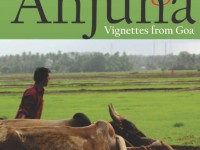
The first part is a geographical statement, but the second part of the proverb is quite provocative and may invite retaliation. This book itself is an indication that the second part does not reflect today’s reality.
I started reading, but had no peace until I could go through all its 392 pages. This is a book of reference. Researchers will find abundant material for further investigation. Yet, the language is simple and attractive for any reader. Each family from Anjuna should have a copy of this book in their house and more to gift to friends.
Categories:
Posted by opspl-online Aug - 15 - 2015 0 Comment

When all the publicity about his class Elvis as Anthology began in 1992, Peter Nazareth faced a lot of jeering and prejudice. A radio interviewer from Chicago asked him, on air, whether his class was going to be in pharmaceuticals or cookery. He said it was going to be in literature: he was going to analyze the work as he did novels. There were three targets: (1) Elvis, as a working class; (2) Iowans, as hicks; (3) Peter Nazareth, a foreigner. Comments Peter: "I discovered that when they do not understand, most Americans, including professional critics, mock and put down from a position of superiority."
Peter Jennings had just interviewed a guy called Peter Nazareth on ABC's World News Tonight. Peter Nazareth had just come out out of the bush, so to speak, out of Africa, and started teaching Elvis 101. The first university course on Elvis. I mean, many people idolized Elvis but to make him serious stuff in university, never mind it was a university in a third- world state like Iowa, was real way-out stuff.
Categories:
Posted by opspl-online Aug - 14 - 2015 0 Comment

A fragment of the birth register at the Church of the Holy Family at Mermajal(Omzur), 16 km from Mangalore, records the birth of Isabella, daughter to Joao Macedo and Rosa Braga, on June 19, 1801. Joao is my great-great-great-grandfather.
This is the only record of his existence; the family's history has forgotten him. It remembers, however, that the family was one among most of Kanara's Christian population deported to Srirangapatna in 1784 on Tipu Sultan's orders, and that their entire property was confiscated by the state. It also attests that the family originally came from Halldonnem (Aldona) in Goa where they were ganvkars of the Prabhu clan. If Joao had not returned from Srirangapatna, the family would have passed into history with nothing to record it ever existed.
Categories:
Posted by opspl-online Aug - 13 - 2015 0 Comment
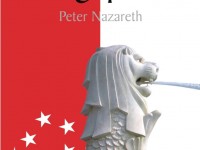
Peter Nazareth of the University of Iowa wrote this two-part work on Singapore literature. With his panopticon vision, Nazareth presents informative insights. His work on the writing of the sovereign city-state and Southeast Asian island country is being specially published as an e-book.
Re-membering Singapore, to the author, involves placing diverse pieces together to re-create the country. In it, he attempts a new form of criticism. Nazareth's purpose was to create a way of writing literary criticism about Singapore's literature. He has giving the criticism a name (or, more accurately, names for different types of criticism), to have a handle for dealing with so much Singapore literature. Of giving us an idea about Singapore literature without being able to deal with everything.
Categories:

Preia-Mar (‘The High Tide’): From a privileged yet impoverished family, Leo tries to strike it rich by any means possible in the Goa of the 1970s. Moving through various strata representative of the society of his times — new ascendant classes linked to smuggling, mining and politics, hippies tired of the West in search of […]
Categories:
Posted by opspl-online Apr - 18 - 2015 0 Comment

This work spans over 81,000 words and over 483,000 characters. it has 304 pages and over six dozen photographs. Many of which are compiled for the first time, and a few of which are so old that most of us might have even forgotten that these existed.
Three aspects of Valmiki Faleiro's work would perhaps strike any reader who comes across it, as it did to me.
Firstly, Valmiki is a story-teller par excellence. He goes into full flow when he sees an interesting story. This is true of the man in real life, as it is obvious from his writing. Those of us who remember the coverage he gave Margao -- and Salcete -- in his West Coast Times days, back in the late 1970s and early 1980s, will vouch that the man has not lost his touch.
Categories:
Posted by opspl-online Apr - 15 - 2015 0 Comment

Perusing through the articles in this book on Goan folk music authored by Lucio Rodrigues, the pioneer, and renowned Goan folklorist, was like diving to the bottom of the ocean with so many beautiful pearls and nuggets that you just want to keep collecting and never stop. Indeed I enjoyed my dive immensely and understood the mando, dulpod, and deknni better than ever.
Categories:
Posted by opspl-online Apr - 12 - 2015 0 Comment
Confucius said: Study the past if you would like to divine the future.
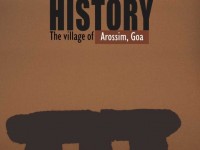
The village of Arossim is known to the outside world for its scenic beach. It is a rural part of South Goa and actually has a long and complex history.
Arossim is situated between the Arabian Sea and tributaries of the River Sal. This agricultural land has sustained inhabitants since Neolithic times.
Early tribal rituals, Hindu traditions, and Christian practices have influenced the region. Each contributed through the centuries to the unique character and customs of the people.
In this book Themistocles D'Silva explores the forgotten and concealed history of the region. A history that goes back to the Megalithic Period. He was pushed into doing this work after recognizing that stone clusters nearly hidden in the rice fields are in fact monuments of an ancient settlement. This book a his revision of his 2011 book.
These megaliths were erected perhaps 3000 years ago and still stand tall. But, over time, their significance has been forgotten. D'Silva also takes us to the land, its people, shrines, festivals and feasts and temples. Besides, his book covers notable facts and events, priests and nuns, personalities from the past, slavery in colonial Goa. And more.
D'Silva grew up in Arossim and is now a scientist in the US. He portrays many aspects of the village, including the ancient system of self-government and the profound effects of Portuguese colonialism.
He unravels the origins of many earlier and present day local customs. Some are now fading as Arossim modernizes and changes. These pages are an inspiration and a model for how you too can discover your own village.
Themistocles Themis D Silva studied in a one-room village school in Arossim. He also attended the local public elementary school in Portuguese, and then Loyola High School, Margao. He graduated from St. Xavier's College, Bombay. Later, he obtained a Ph.D. in Organic Chemistry in the US.
After post-doctoral research there, he took up a position in industry. D'Silva. He is credited with many patents and scientific publications. He recently authored a scholarly book on the Bhopal disaster, The Black Box of Bhopal.
This book is a thoroughly revised edition of D'Silva's earlier book, now out of print. His earlier book on the subject was called Beyond the Beach: The Village of Arossim, Goa, in Historical Perspective. It was published by Goa,1556 in 2011.
Categories:
Posted by opspl-online Nov - 28 - 2014 0 Comment

Caught between settler domination and racism on the one hand and the rising tide of African nationalism and racism on the other -- "the white devil and the deep black sea" -- the Indians of Kenya emerge almost as a pariah group in the years of struggle leading to Kenya's independence in December 1963. Their failure then, and in subsequent years, to secure fair representation, rights to land ownership and freedom from racial discrimination form the subject of this book.
The author played a prominent role in Indian political life in Kenya from 1944 to 1960. Through the records of the East Africa Indian Congress, his own speeches and those of others, newspaper reports and teh recording of the thrust and parry of parliamentary debate, he documents the fractured state of Indian political life, including the fatal Hindu-Muslim division over separate electorates, skilfully manipulated by the colonial government to the advantage of the European settlers.
Categories:
Posted by opspl-online Oct - 13 - 2014 0 Comment

Seeking the homeland of yesteryears, Dubai-based, Goa-born interior designer and architect Joseph C Dias (JoDi) has illustrated the Goa of his childhood, a far cry from its heady identity of today. Developed in a postcard format, these offer terrific insights into the charm of a simpler time, titled Jodi's View Cards of Old Goa. Kanika Sharma gets an exclusive dekko.
Categories:
Posted by opspl-online Aug - 26 - 2014 0 Comment
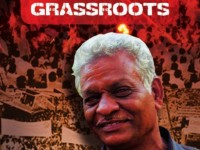
Justice at the Grassroots: A Tribute to Antonio Francisco Fernandes, Leader of Goa's Tribal Communities. By Cyril Aleixo Fernandes.
The Gavddas (also known as the Kunbis) were the first known settlers in this Land of the Golden Harvest which today goes by the name of Goa. Later settlers took advantage of this peaceful community, usurped their land and refashioned their deities. Today, centuries later, they find themselves on the fringe of Goa's development, largely excluded from policy-making, and bearing the ill effects of unplanned and unwanted 'development'.
Categories:
Posted by opspl-online Jun - 9 - 2014 0 Comment

From Goan "joints" at Dhobitalao (originally a washerman's lake), to the quadrangles of Byculla, Mazagon, Grant Road or Colaba, and beyond.
Football at Cooperage and Goan food at Ballard Estate all exported the Goan way of life to that city, which today has a population of 20 million. A new book on the subject seeks to capture the essence of it all, as it played out in the 20th century.
Titled 'Bomboicar: Stories of Bombay Goans, 1920-1980', the book is edited and compiled by journalist Reena Martins, originally from Velim but raised in Poona and currently working in Mumbai. It is available for sale at Golden Heart (Margao), Broadway (Panjim) and via mail order from goa1556@gmail.com
Categories:
Posted by opspl-online May - 29 - 2014 0 Comment
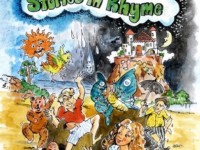
It is hard to define life as each one of us has a different interpretation. However, when you meet young writer Frederika Menezes you get the feeling that there is one who can actually define life for you. A cerebral palsy patient Frederika suffers from physical disability, but there is no room for complaint in her life and on the contrary, is happy for all life has given her. I've been lucky all along and I acknowledge that, says Frederik. These days Frederika has more than one reason to be excited about life. Today, two of her books are being released Unforgotten, a young adult novel, and Stories in Rhyme, a book of verse for children.
For Frederika her strength comes from family and friends whom she cherishes. She is constantlyin touch with friends over emails and social media. She believes that technology has made life easy for her. Technology is helpful for everyone, not only me. I type with two fingers and I am quite fast compared to people who type with both hands, quips Frederika, who started typing with typewriters.
Categories:
Posted by opspl-online May - 29 - 2014 0 Comment

Unforgotten is a novella about love lost and found; a first person narrative, where sustained reflection blends with action to trace the hero's journey through its many twists and turns. It carries the flavor of an age-old allegory about the artist grappling with his demons, internal and external, as he pines for his muse. Frederika Menezes has carefully painted a realistic setting for Ian, her central character, and has set in motion forces that drive him; from India to England, from home to office and to the mental hospital, to the writing desk, to the guitar, to the pain of loss of love, to the discovery of inspiration. Yet, the allegorical quality of the story is what lingers when the last page is turned. And yes, Goa finds place here too, a dream-like world which holds what is most vital, and never quite forgotten. --Isabel de Santa Rita Vas .Theatre promoter, youth mentor and former professor at Dhempe College.
An engaging love story. Salil Chaturvedi. Poet and author
now she has nothing but the storm to create a past with but then she had her love and her friends, and though they turned away, long before now, she can recall them in her mind, hear their voices and feel momentarily alive in the company that will always be with her but never a part of her life as once it was. Was she right? Ian took time to realize the intensity of his lost love, his first love. But when he did, Ian left no stone unturned to retrieve it. The tribulations that Ian goes through fortifies our belief that emotions and sentiments are the same, whether in Europe or in Asia; in Kent or in Goa.
Categories:
Posted by opspl-online Apr - 23 - 2014 0 Comment
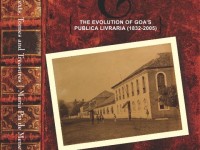
The State Central Library, Goa, occupies a place of pride among the oldest public libraries of India. It was started during the Portuguese regime, in 1832, and was known as Publica Livraria. In 1836, the name of the library was changed to Bibliotheca Publica de Nova Goa. After Liberation, various changes were introduced and the library services were expanded. The Biblioteca Nacional de Goa was renamed as the Central Library, and in 2012 its name was changed to the Krishnadas Shama State Central Library. Today, it has plush new premises at Pato, at the entrance to the Goan state capital. This book by a one-time head of the institution is a detailed attempted to trace its history and chart out the challenges that lie ahead. Includes a 16 page photo-essay on libraries in Goa today, by Gabriella D'Cruz.
BOOK EXCERPT: Books and libraries in Goa: tomorrow's challenges
By Maria Pia de Menezes Rodrigues
Rapid and very exciting developments in information and communication technologies in the 21st century make it necessary that public libraries have to change the way in which information is collected, displayed and accessed. They need to play an important role in eliminating the digital divide, created due to the gap between the information rich and information poor.
Categories:
Posted by opspl-online Jan - 1 - 2014 0 Comment

A wide-ranging account of the place Goa occupied both in India and the world beyond, before the advent of the British Raj. It was the capital of an European maritime empire that teetered on the brink of collapse in the tumultuous seventeenth century, only to become a thriving cultural, religious and diplomatic hub in the 18th century, building close relations with the foremost continental empires of the day -- Mogul, Maratha and Mysore.
The globalisation of trade in the 18th century restored its former Atlantic ties via Brazil and the development of the African slave trade, while also opening doors to the Orient, via China and the opium markets. Within a century, however, it was but a modest outpost of the bustling Bombay.
Categories:
Posted by opspl-online Dec - 1 - 2013 0 Comment
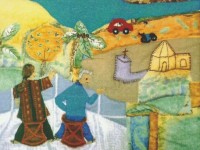
Globe-trotting Grandma returns to the quiet of Joe's sit-out. "The view is worth the climb!," her Joe said when they chose the topmost apartment. This is where they talked and shared silences, where their children came to relax, where on annual visits their grandchildren marked off their heights on the wall -- "How small we were then!" This is where she invites you to taste famous Goan delicacies and to meet some of the wonderful people she has known, among them, postman Pandu, the prayerful Shantadevi, Dona Armida of 'dona eis requeim' fame, dear Domingos the versatile cook, the renowned Art Sir, the resourceful Tia Caru, and Victoria Rani's loyal subject Dukhi Devi.
"We've reached, we've reached!" we shouted, Tony and I. "Not there yet," said Mama.
We were nearing the end of our twenty-four-hour train journey from Dadar to Margao. The two of us were travelling with Mama. Our three elder siblings would follow with Papa, when their college holidays began. We had had changes of trains at Pune and then Londa, with long stops at Castlerock and Collem stations, for customs inspection at the British India and Portuguese Goa frontiers.
Categories:
Posted by opspl-online Dec - 1 - 2013 0 Comment

Brig (Retd) Ian da Costa, VSM pens his memoirs. From the story of the migrant Goan community in Nagpur, to his experiences in the Indian Army.
This is a ring-side view of India's changing times in the first five decades after Independence, though the eyes of a military man.
Ian da Costa's story begins in Nagpur of the 1940s. In that Central Indian city, a community of Goans worked hard and smart to build their future. Those were times of ferment and tumultuous change.
We encounter the military transitioning from a colonial British-run institution to one serving Independent India. From life in the Indian Military Academy, to serving in Jammu and Kashmir in the 1960s while attached to the 14th Kumaon Regiment, Brig da Costa's story takes us along unexpected paths to the tough forward lines of the borders over two wars, to the Poonch-Jhalas base, Surankote, Naushera, the Battle of O.P. Hill, the Hajipur Sector, Madras, the raising of the Naga Regiment, the 1971 War in Bangladesh, and more.
Categories:
Posted by opspl-online Dec - 1 - 2013 0 Comment
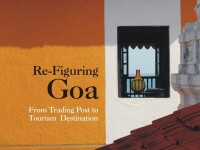
Challenging our current understanding of Goan society and history. RAGHURAMAN S. TRICHUR is Professor and Chair of the Department of Anthropology, California State University, Sacramento. His teaching and research focus includes comparative political economy, state and class formation, critical analysis of cultural change, tourism, development and violence in South Asia.
Goan Society / Political Economy / Development
Goa,1556December 2013
Pp 208. Pb.
ISBN 978-93-80739-50-2
Raghuraman S. Trichur is Professor and Chair of the Department of Anthropology, California State University, Sacramento. His teaching and research focus includes comparative political economy, state and class formation, critical analysis of cultural change, tourism, development and violence in South Asia. rtrichur@saclink.csus.edu
THIS BOOK sets out to challenge our current understanding of Goan society and its history. Rather than filling in our knowledge with details of Goa along the lines of well-established conventions, Refiguring Goa pushes the study of the region in a new direction. It asks fresh questions, challenges long-held orthodoxies, and encourages us to refigure our understanding of issues that affect Goa today. Following a critical reading of Goan historiography from colonial times to the postcolonial present, Trichur develops an alternative framework by examining the development and the process of class formation in Goa. He traces the growth of the indigenous mercantile elite and the peasantry who, he argues, have been the chief architects of the postcolonial Goan economy.
Categories:
Posted by opspl-online Dec - 1 - 2013 0 Comment

Whether for business or personal use, the cyber world in ubiquitous, and will be only more pervasive in the future. It simplifies the jargon from the complex world of spam, computer viruses, trojans, spyware, corporate espionage, hacks, cyberwar, cyber protests, social networking privacy, and complicated security technologies.
Pragmatic advice on staying safe online. A must read for all social networkers.-Anand Mahindra, Chairman & Managing Director Mahindra & Mahindra.
We are witnessing a hastened transition from physical to virtual world, however unfortunately the degree to which we are able to understand and react to the risks due to the cyber world are extremely inadequate. This is posing a significant challenge to the public in general and sentinels in particular.
Categories:
Posted by opspl-online Oct - 1 - 2013 0 Comment

The General Is Up is a "novel set in modern Africa" by Peter Nazareth. Its story seems, at first glance, to be a fictionalised version of the expulsion of Asians from Idi Amin's Uganda in the 1970s. But its writer sees it as being something more than this. The author was associate professor in Iowa University's Department of English and the Afro-American Studies Programme, at the time of writing the novel, published by the Calcutta (Kolkata)-based Writer's Workshop in 1984. Nazareth is a writer of Goan origin, and the novel is set, in large part, among the expat community of Goans, which has had a large number of out-migrants scattered across the globe, including, in the recent past, in Uganda, East Africa.
Categories:
Posted by opspl-online Aug - 1 - 2013 0 Comment

Students from Sweden of a post-master's inter-disciplinary course in urbanism encounter Goa. They ask the question: Could urbanisation propose other ways of interpreting the prevailing spirit between nature and culture? They come up with an insightful take on contemporary Goan society.
Categories:
Posted by opspl-online Jul - 1 - 2013 0 Comment
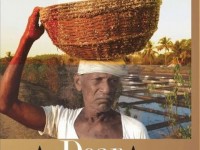
Goa was once famous for its salt. This book studies salt-farming communities as they exist today in three villages (Agarvaddo in Pernem, Batim in Tiswadi and Arpora in Bardez.
Categories:
Posted by opspl-online Jun - 27 - 2013 0 Comment

PANJIM, June 27, 2013: A young expat Goan has done something about his sharp concern about drinking-and-driving, by making his maiden novel tell a story based on that theme.
Nigel Fernandes, who has been in New Zealand but is currently back at Socorro, has just authored 'Consequences', a 214-page thriller that deals with this serious theme which afflicts many parts of India today.
Significantly, the 37-year-old writer has dedicated the book to his "nephew Jared Tristan D'Souza, killed by a reckless motorist" when four months short of two years old.
The quick-paced thriller itself, which he took eight months to write, has a vigilante conspiracy being hatched, and is set in Bombay. Mysterious 'accidents' happen to those who are on a list of accused, who claimed victims on the roads of the city, but when the law does not seem capable to bring to book.
Categories:
Posted by opspl-online Jun - 12 - 2013 0 Comment
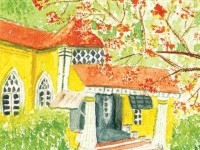
Goa is breathtakingly beautiful in August. Every tree, bush, sapling and rice field stands in its amazing green glory. The rivers, ponds and the Arabian Sea simply brim with awesome beauty.
Paula sat in her grandmother's teak rocking chair in her balcao, or porch. She was in her forties. Yet her fair, square face was beautiful despite the few wrinkles it accommodated. She watched the huge bulldozer raze through the grand palatial house of the Mirandas. Her heart sank and her mind was a whirlpool. The bulldozer mercilessly rampaged over the house which once commanded the attention of the entire village called Benfica.
Charmingly narrated, A Matter of Time is a memoir, full of simple episodes that might have been experienced by any child who grew up in a Goan village in the 1980s. Yet, at another level, it gives a picture of the stark reality of how much the topography of most Goan villages has changed over the last few decades... how the lifestyle has changed from simple rural living to a 'modern' one.
Categories:
Posted by opspl-online May - 1 - 2013 0 Comment

Charming short stories and reminiscences with Goan sap.
Categories:
Posted by opspl-online Feb - 1 - 2013 0 Comment

These memoirs highlight powerfully the agony and the ecstasy of a religious vocation and the call to priestly ministry. Through real-life experiences, Fr. George, who is widely known as an engaging storyteller, shares his journeys and discoveries. The narrative covers his childhood and family upbringing, growing up Catholic in India with its multi-cultural and multi-religious landscape and all the joys and challenges of becoming a priest and living the priestly life as an immigrant, international priest in the United States of America. "I am where God wants me to be" is Fr. George's life defining 'aha' moment, which enables him to love being a priest and to conclude that Everything is Grace.
Categories: