POEMAS | Poems Edições de Goa,1556 Vimala Devi is a Goan poet and short-story writer who wrote in Portuguese, portraying Goan life, culture and memory with sensitivity, most notably in the poetry collection Súria. She was born in 1932 (real name Teresa da Piedade de Baptista Almeida). The Goan-born writer in Portuguese moved to Lisbon […]
Categories:

Structured across seven chapters, this book examines the development of Christianity in Salcete (Goa), with particular emphasis on the first five parish churches of the region. It engages with a range of themes, including the relationships among religious Orders, processes of church construction, patterns of conversion, internal challenges within the Christian community and the economic […]
Categories:

Is Portuguese a language of Goa’s past, or does it have an unappreciated potential for its future too? That’s one of the issues raised by a new book that tracks lived memories about that language in this region, through the memories of 45 contributors.
Categories:

The room was dark, and the smell of incense overpowering. Slowly, as our eyes grew accustomed to the darkness, we could discern a small mattress on the floor upon which was a creature that looked hideously deformed. She… or it… had her back towards us. She laughed, a high, shrill, cackling laugh that went on […]
Categories:

CHANGE is inevitable. Sometimes it’s a leap in the dark. Other times, it’s the only way to begin again. Fifty-three-year-old Robin Fernandes wasn’t sure how he felt about the change ahead. The beautiful house in Sangolda, more than a century old, sprawling, sunlit, and filled with antique furniture, had grown burdensome since his wife, Greta, passed away ten years ago.
Categories:

Marge wrote in with song requests. Their letters give an insight into all their dreams, courtship, trials and tribulations that came along with the package of a long-distance relationship amid the political upheaval between India and Portuguese Goa.
Categories:

Published by Goa 1556, The Story of Janakye Bai stands as a tribute to the Velip people and is an invitation for all readers to listen to voices that have too long remained unheard.
Categories:

An old story from the Velip community of Goa, perhaps the first book written by members of this subaltern group. It is a folk tale of theirs, narrated here in Konkani (in the version which the community itself speaks, so might come across as ‘non-standard’ at times). There is also an English version of the […]
Categories:

Mr. Cosme C. Lobo has written this book by acquiring knowledge from other sources but more from his own experience of the many years he lived in the village.
Categories:

Dr Mohan Prabhu, LL.M, LL.D, QC was christened Antony Michael Castelino. He pursued a university education in Arts and Law, in Bombay (BA, LL.B, MA), London (LL.M), and Canada (LL.D). Mohan has worked in India, England, and Canada. His career in law includes fellowships at Osgoode Hall Law School (Toronto), and Columbia University (New York), […]
Categories:

READING, AND A LOVE FOR BOOKS AS A CHILD: The trajectory of my life can perhaps be better understood by a letter that my brother Oscar, now 97, forwarded to me ten years ago; I had written it to him when I was eight years old, and he had saved it for seventy years. I had written to him in 1933: “Today, Father brought me more books. Leonor arranged all my books on my table.”
Categories:

The River Mhadei: The Science and Politics of Diversion brings together a wide range of experts—scientists, ecologists, legal scholars, historians, planners, journalists, activists, and community practitioners—to explore a pressing environmental dispute. Centered on the waters of the Mhadei, which are contested by the states of Goa, Karnataka, and Maharashtra, the volume moves beyond the narrow confines of technical and legal debates over water diversion and allocation to present a richly layered portrait of the river as a living presence.
Categories:

In this book, the editors and authors intend to identify design choices that have underlined how experiences with the justice system have manifested in Goa particularly, and India more generally. Design offers a methodology to systematize as well as order the world around us. It provides opportunities for direction, definition, control, as well as possibilities for making and remaking. Using design as a lens, we are keen to understand how far such an approach can help with studying the forms of justice delivery, examining the purposes, processes as well as contexts of justice systems.
Categories:

This book studies Goa’s ancient defensive system in India, set up and developed by the Portuguese in the first and a half century of occupation. It therefore covers the period between 1510 and 1660 — between its conquest and the decade of the Maratha political-military emergence, which coincided with the
reawakening of the Dutch-Portuguese war.
Categories:

A useful dictionary, in the Konkani and Portuguese language. Early readers noticed that it contains some old, and now rare, words.
Categories:

A Romi-script Konkani-English dictionary.
Categories:

The Inquisition`s documents kept secret for so many centuries, are being presently being made available to historians and the general public for study and evaluation.
Machado believes that these documents reveal an alternate narrative to the one we are familiar with, particularly regarding the Black Legend, Francis Xavier's alleged role in bringing the Inquisition to Goa, its objectives and functioning, the nature of an auto-da-fe, its relations with the king, State, and non-Christians, emigration, etc.
Categories:

This is a story about journalism in Goa, or rather, multiple stories. Journalists with experience in the field (a few from outside Goa), tell their stories about their field. Makes for interesting reading.
Categories:

Rao is the author of this tween novel. She is based in Hyderabad. Cheryl Rao has written over 30 books for children, including adventures, strange stories, ‘tween’ tales, and picture books. Her books have been published by CBT, NBT, Mango, Tulika, Pratham, CUP, OUP, and Rupa. Impressive.
Categories:

Nor have I ever until now seen an uglier animal or appearing as useless as this one. —Fernando de Oviedo y Valdéz, 1526. One of the meanest and ill-famed of creatures that chews the cud. —Oliver Goldsmith, 1825. Sloths have no right to be living on earth, but they would be fitting inhabitants of Mars […]
Categories:

Belgão is what the Goans settled in Belgaum (now Belagavi) knew the place as. Believe it or not, but they often thought of their home as the ‘Centre of the Universe'. This book is their story.
Categories:

We can all learn from the lived experiences of others. A proverb is the experience of many and the wisdom of one person who put that lived, practical, life giving, universal experience into words. Those who cultivated wisdom were called sages. These sages became instructors of the people, especially of youth. In times of crisis, […]
Categories:

“You’re stuck now,” said Milena Marques-Zachariah’s husband, Zach, trying to hide his disappointment. Emirates Airlines had just cancelled all flights to and from India. A day earlier, Canada had also suspended all flights from India, starting April 21, 2021. It felt as if fate—or some angry gods—had stepped in to make sure Milena would miss […]
Categories:

From tales of migration and exile to intimate family dramas, from rediscovered histories to imagined futures, Ways of Belonging offers readers a mosaic of experiences shaped by the region’s unique cultural and linguistic intersections.
Categories:
Posted by opspl-online Oct - 16 - 2017 0 Comment

Living in the coping with one too many siblings and walking barefoot for miles on end. It was also a period where time stood still and each moment uncovered was filled with rare emotion and gratitude.
Aida is a little curly head girl from those times. She was born in 1935 in the quaint and charming village of Saligao. This is her story. Seen through her eyes, but narrated by her just-out-of-college 21st century grand-daughter, Melody.
Aida is loved by all, children and adults alike. Her little acts of courage will warm your heart. Her rather large family brings you incidents of frolic and fun. Yet life is not all happy for Aida, as sudden happenings lead to loss and pain. She also has to deal with a war persisting around her. Will Aida be brave enough to face these obstacles? And will she be able to find the happy ending she's looking for?
Follow Aida as she takes you to a time in Goa where even a simple life can have its ups and downs....
Categories:

Building greater access to financial services for the poor is one of the most powerful ways in the process of eradication of poverty. Economists have long argued that providing a complete set of financial services to the poor would go a long way in releasing them from clutches of poverty. The Self-Help Group (SHG) model, […]
Categories:
Posted by opspl-online Jan - 13 - 2017 0 Comment
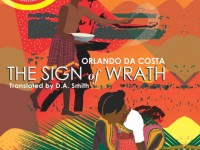
O Signo Da Ira by Orlando da Costa presents a year(approximately 1940-1941) in the life of a rural society in Goa, then ruled by portugal. There are 2 major social classes: the hereditary landowner, bab Ligor and his tenants, low caste field laborers.
During the previous few years, severe drought has endangered the principal crop of the region, rice. The Japanese occupation of much of eastern Asia has worsened the situation since rice cannot be imported to supplement the meager harvests.
Categories:
Posted by opspl-online Jan - 13 - 2017 0 Comment

A play in three acts, takes place on the night of the end of Portuguese rule in Goa, in 1961, in the house of a family grieving for the death of Leopoldina, Salu's elder sister and adoptive mother to Bostu. Salu is a batcar (landlord) who hides a secret from his family. Leopoldina gives away her lands to Salu and curses him by saying that the lands are extremely fertile, rich in ore and that she exchanges a fertile land for his infertility.
Categories:
Posted by opspl-online Jan - 7 - 2017 0 Comment

This cookery book aims to help you get started with everybody's favourite Goan food. Cooking need not be tough, if you know how to approach it.
Chef Chandan Chari keeps things simple. Simple, yet unique. The ingredients are easy to come by. Recipes have been tweaked to become as easy as possible. Though some of the recipes might seem familiar, the dish could turn out to be rather different.
The goal of the book has been to create the desired taste with a good texture based on locally available ingredients. From appetizers to salads, side-dishes to main dishes, and sweet treats, a wide range of recipes offer a whole lot of ideas and guidance from a Goan chef whose culinary creations have been widely appreciated.
Do not miss the made with Goan love recipes. Specially those of grilled mussels stuffed in shells, tuna fish baskets, sprouted salads, fish in green curry, prawn balchao, mushroom chicken, galmo (dried shrimps), sukhey khube (seafood), and the all-time popular rava-fried fish.
Categories:
Posted by opspl-online Nov - 26 - 2016 0 Comment
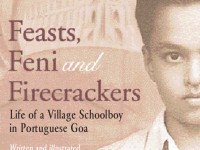
Painting word pictures (and pencil ones) of the past [Frederick Noronha]: It seems like ages ago when one of those expat Goans wandering the lanes of their homeland, and often struggling to cope with the changing reality, dropped in at my home. Mel D'Souza had the idea for a book, which he planned to work on when back in Canada.
Not too many years later, he presented me with a copy of 'Feasts, Feni and Firecrackers'. If you're guessing what it is all about, its sub-title explains it all: "Life of a Village Schoolboy in Portuguese Goa". This is a book D'Souza Mel himself wrote and illustrated. The latter is important, because it has a number of charming illustrations set in Goa.
It harkens back to a Goa of yore, one which many who lived here would remember and recognise. My first memories of Goa go back only to the late 1960s, but even then there were strong traces of the Goa that was, and a place which was drastically changing even before our eyes.
Categories: